
What to Know Before Your First Tour
For artist managers, booking agents, and first-time tour coordinators figuring out what touring on an entertainer coach actually involves.
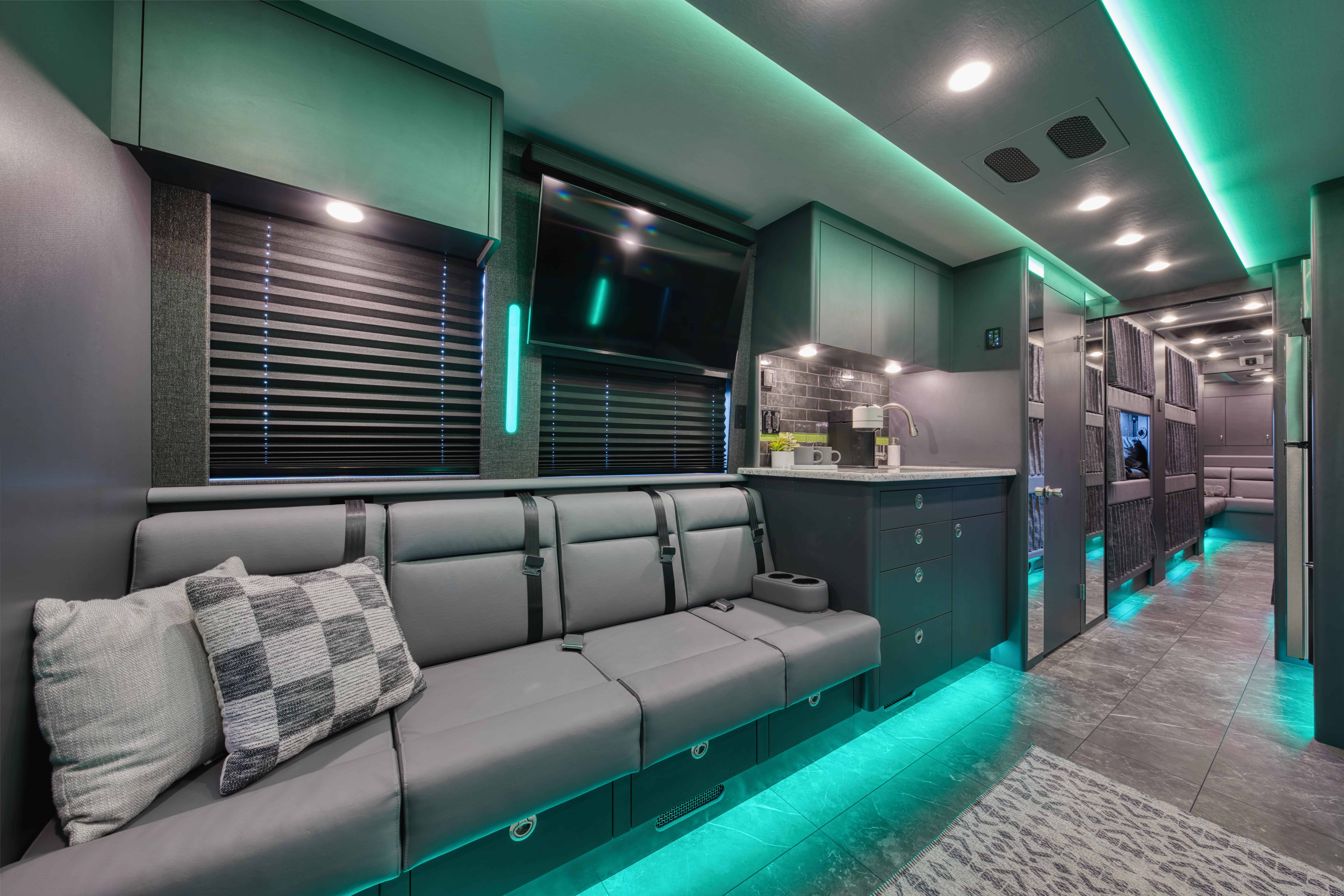
What to Expect Your First Night on a Coach
The first night on an entertainer coach is disorienting for almost everyone. Here is what experienced touring professionals have learned to do.
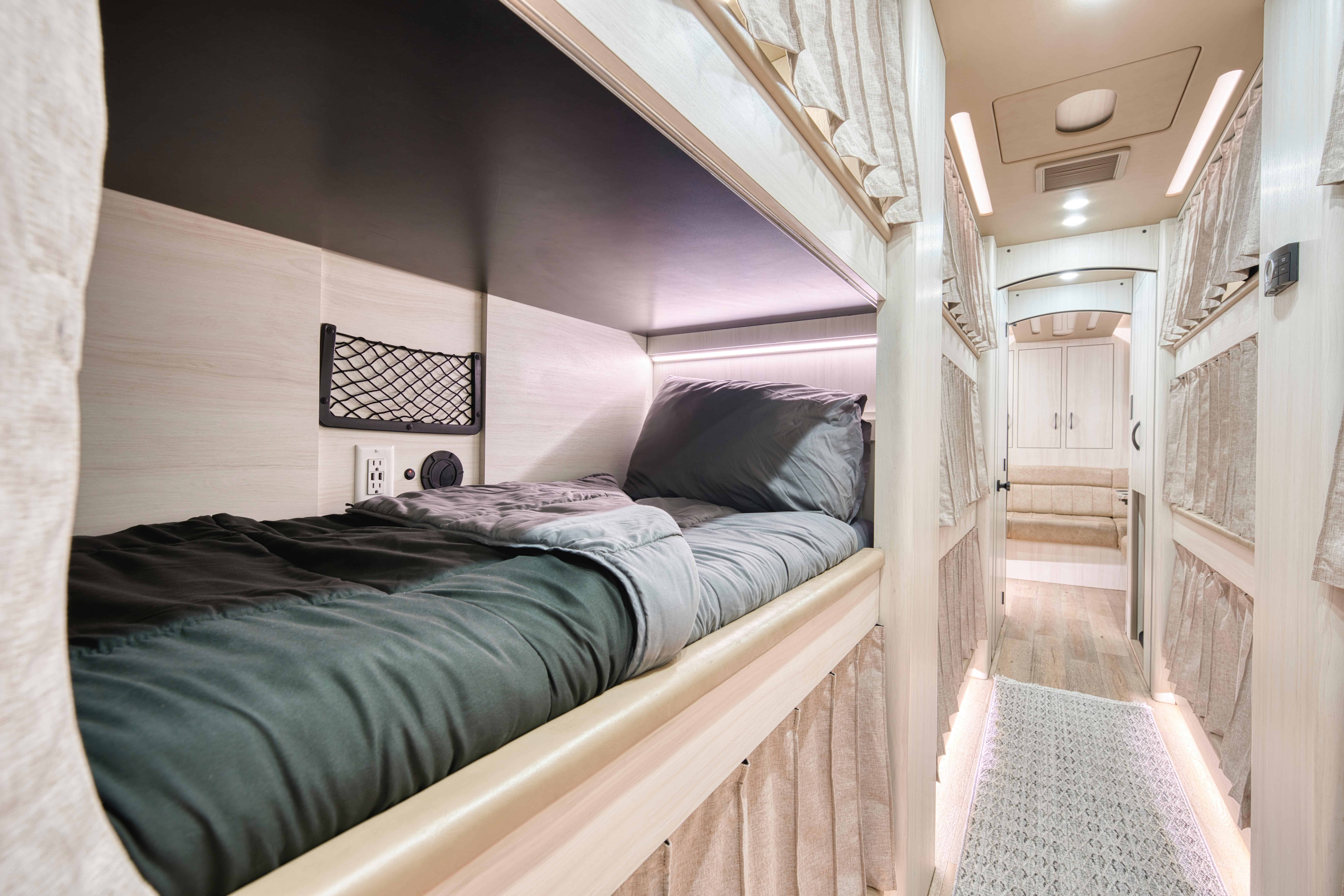
Bunk selection matters more than you think. The middle bunk is generally considered the best balance of comfort and stability. The bottom bunk is the easiest to get in and out of but tends to pick up more noise and vibration from the road. The top bunk is quieter but sways more noticeably. If you have a choice, the driver’s side of the bus is typically quieter than the passenger side.
Invest in good ear plugs. Loop earplugs have become popular with touring crews because they work both on the bus and at the venue.
Bring flip flops for the shower. Non-negotiable.
Pack a day bag. Keep a small bag with your toiletries, shower essentials, and a couple of days worth of clothes accessible so you are not digging through your main luggage every morning.
Clean up after yourself. The bus is home for everyone on it. How you treat the shared space is how you treat your coworkers.
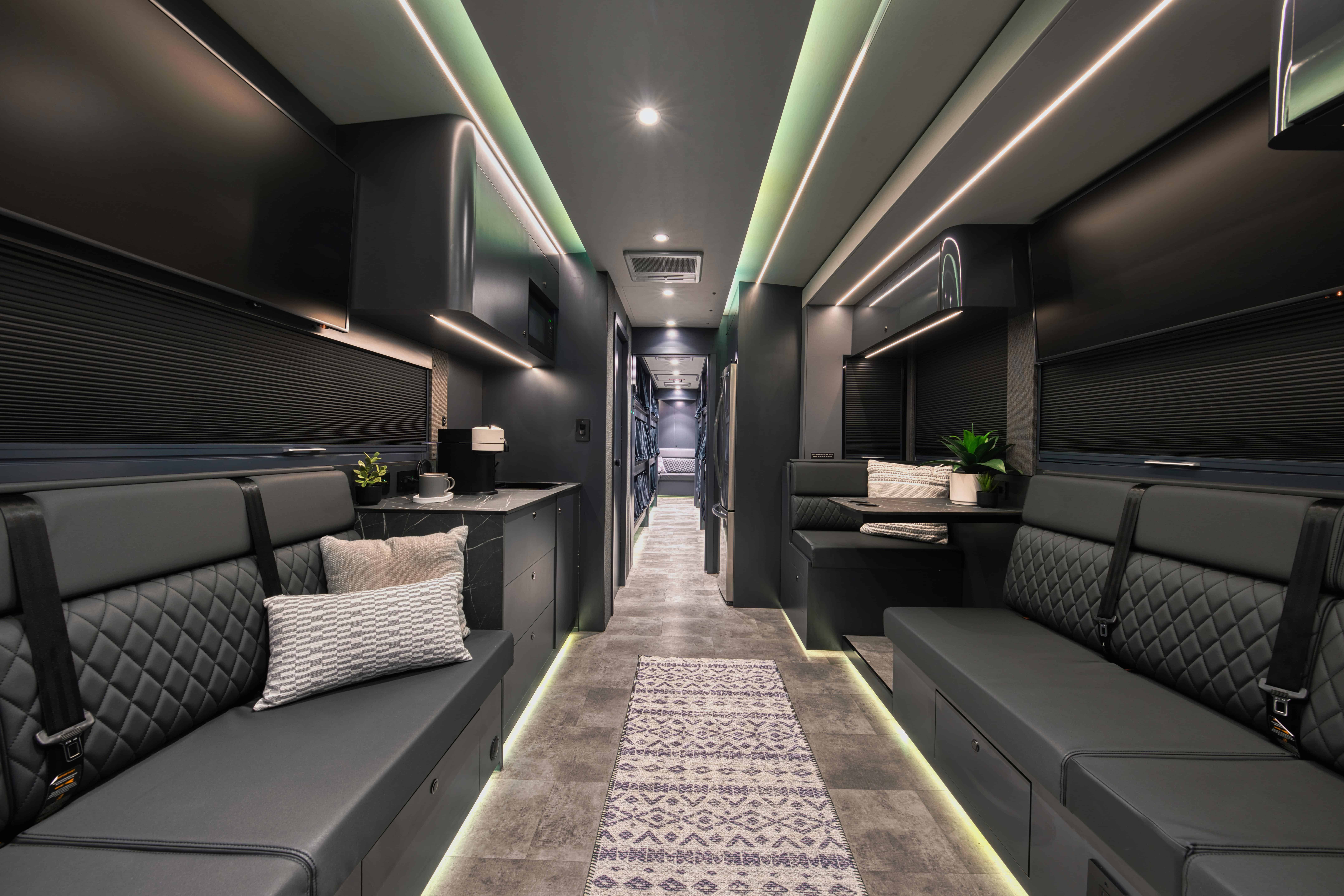
Common Mistakes First-Time Tour Managers Make
Not building in enough sleep and travel time between shows. The schedule looks achievable on a spreadsheet. On the road, with load-out delays and a driver who needs rest, it often is not. Build in more time than you think you need before you think you need it.
Not tracking venue-specific details. Every venue has its own load-in times, parking policies, and coach access rules. Assuming they are all the same is one of the most common and costly mistakes a first-time tour manager makes. Confirm these details for every stop before the tour begins. Always give yourself more time than seems necessary.
Charter Bus vs Entertainer Coach: Which One Do You Need
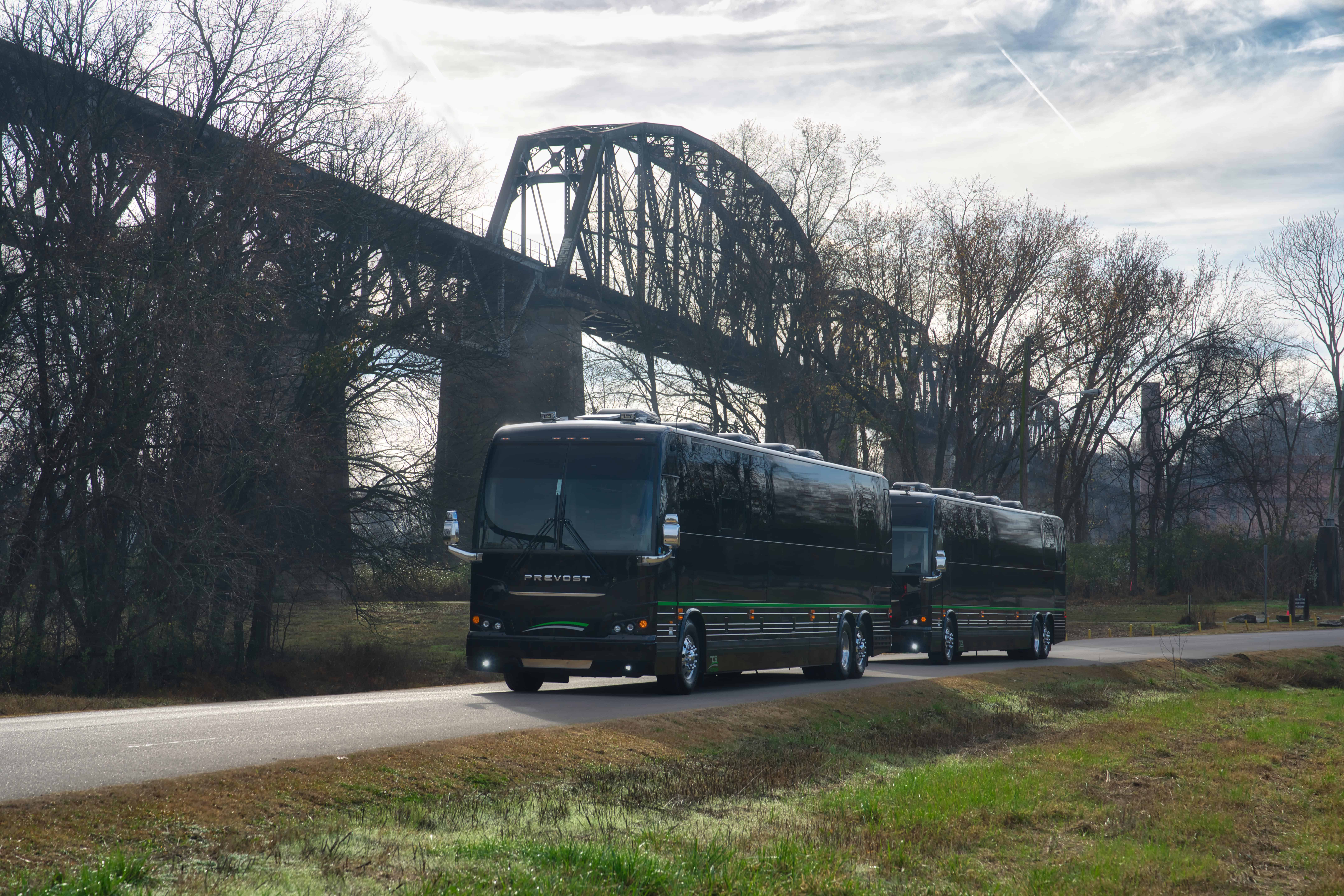
They are fundamentally different products built for different situations.
A charter bus is designed to transport large groups efficiently. Amenities are basic and the focus is on capacity and point-to-point movement. If your tour is anchored in one city and all your dates are within a relatively short drive of each other, a charter bus may be the right and more economical choice.
A Prevost entertainer coach is designed to be lived in. Comfortable sleeping arrangements, private spaces, showers, slide-outs, and high-quality WiFi are built into the product because the coach is not just transportation. It is where your artist and crew spend the hours between shows. For longer tours with significant travel days, it is not a luxury. It is a functional necessity.
When Does a Tour Bus Make Financial Sense
The simplest way to think about it is to add up what you are currently spending on hotels, airfare, and local ground transportation for your full crew per day on the road. When that number exceeds the daily cost of a luxury touring bus rental, the bus pays for itself and often comes out ahead while delivering a better experience for everyone on the tour.
To find out what a coach would cost for your specific routing and headcount, call us or fill out the quote form for a same-day response
Why the Industry Chose Prevost
The short version is that Prevost earned its position by performing under conditions that exposed every weakness in other platforms. For a deeper look at the engineering and operational reasons behind that, visit our full Prevost page.
What is worth knowing here is that TCS runs Prevost entertainer coach conversions across its 12-sleeper crew coach fleet, and offers both H3-45 and X3 options for star coaches. Every configuration in the fleet starts from the same platform that the touring industry has trusted for decades, and builds from there.
How Federal Hours of Service Rules Affect Your Tour Bus
Before you can plan routing, you need to understand what your driver can legally do. The Federal Motor Carrier Safety Administration sets strict limits on commercial drivers, and those limits shape every decision about how your touring bus moves.
The 10-hour driving limit
After 8 consecutive hours off duty, a driver is allowed to drive for a maximum of 10 hours. Once those 10 hours are used, the driver cannot get back behind the wheel until completing another full 8-hour rest period.
The 15-hour on-duty limit
After 8 consecutive hours off duty, a driver cannot drive a commercial vehicle once they have been on duty for 15 hours total. They may perform other work after the 15-hour mark but cannot drive.
The 60/70-hour duty limit
If your touring company does not operate vehicles every day of the week, a driver cannot drive once they have accumulated 60 hours of on-duty time across any 7 consecutive days. If your company operates vehicles every day, that limit extends to 70 hours across any 8 consecutive days.
What this means practically is that your routing is not just a question of mileage. It is a question of whether your driver can legally cover each leg within their available hours. TCS accounts for all of this when building a quote, and Jennifer will flag any leg in your itinerary that requires a team driver or a hotel stop to reset the clock before you sign anything.
Ready to Price Your Tour-Ready Coach?
Tell us your dates, routing, and headcount. We’ll recommend the right conversion and send a fast, clear quote.
Request A Quote