
What Tour Managers Need to Know
A resource written for people who are responsible for keeping a tour moving. Everything here comes from TCS’s 40+ years of operational experience.
Which Tour Routes Work Best
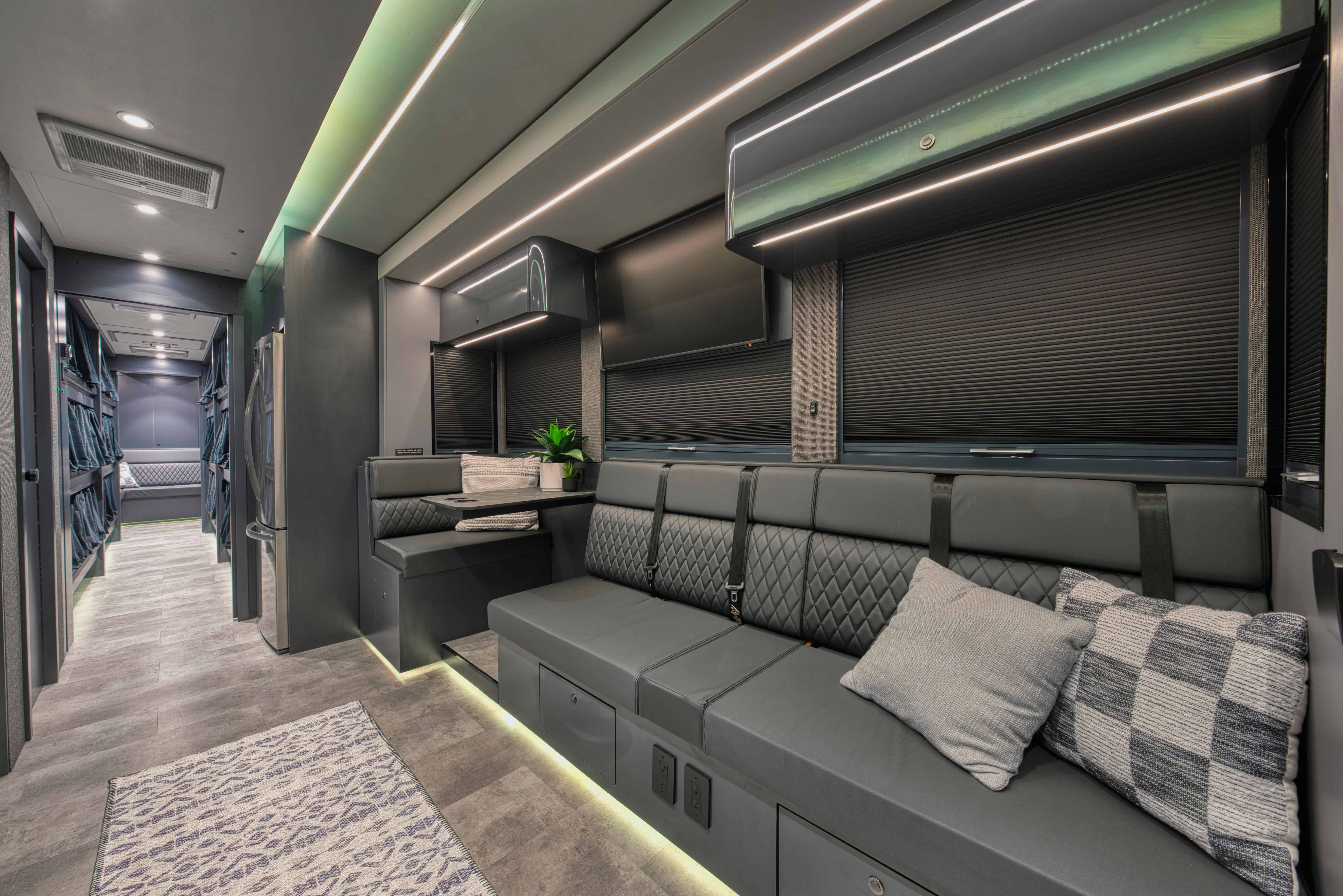
Not all routes are equal and experienced operators know the difference. Jennifer puts it directly: TCS’s commercial mileage software and drivers will always recommend interstates and highways over curvy two-lane roads. The goal is practical routes that are smooth, safe, and have accessible fuel and food stops along the way.
Some clients want to use Google Maps and take the fastest route, which can route through mountains and two-lane roads with low speed limits. Those roads are not comfortable to ride as a passenger, and they introduce variables that can throw off an entire leg. The software TCS uses also detects road closures, delays, and bridge clearance issues in real time, which matters on a long run where a single unexpected closure can cascade into a scheduling problem.

What Amenities Matter Most on a Long Run
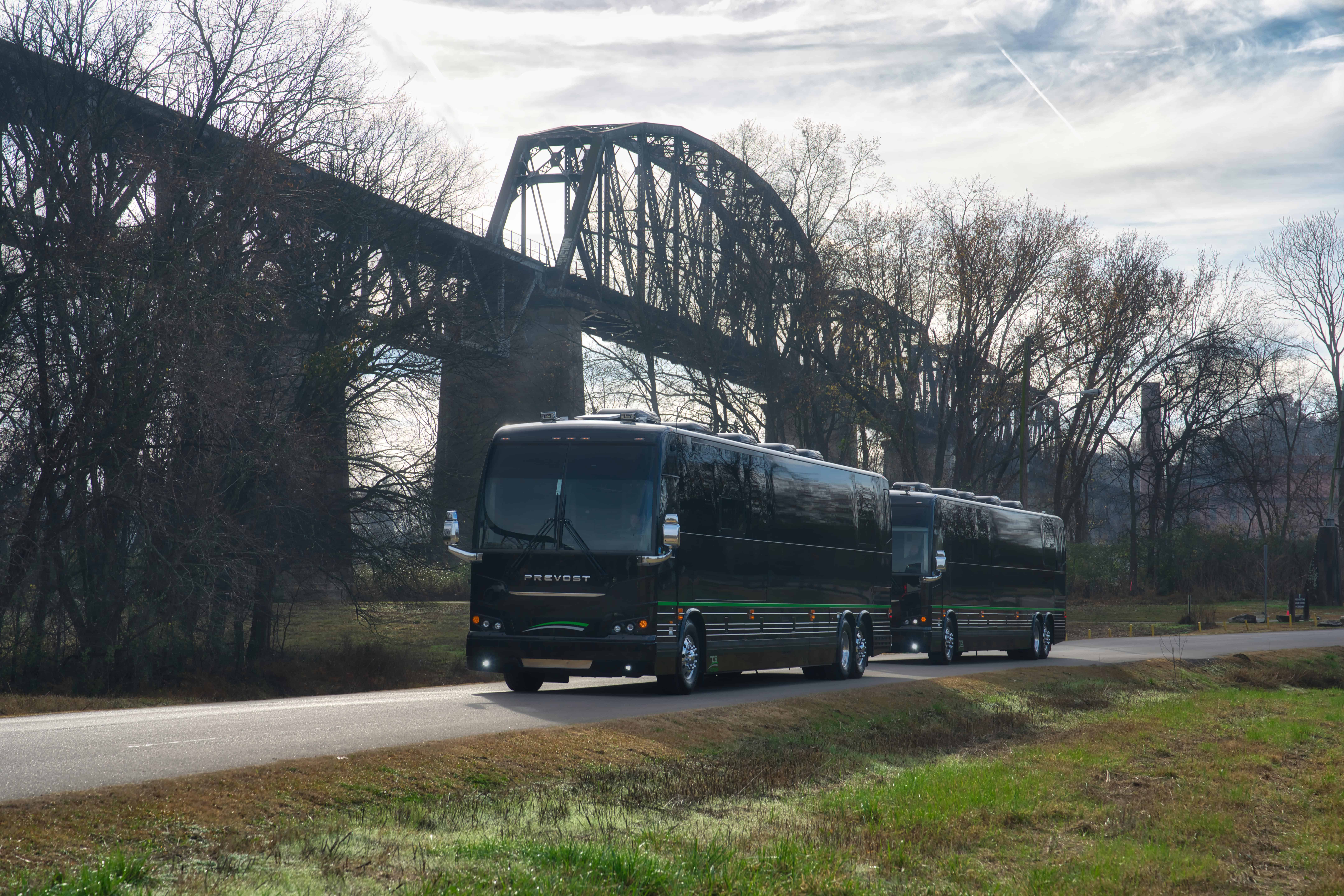
Not all amenities are equal when the run stretches past 30 days. The ones that actually determine whether a tour is sustainable are:
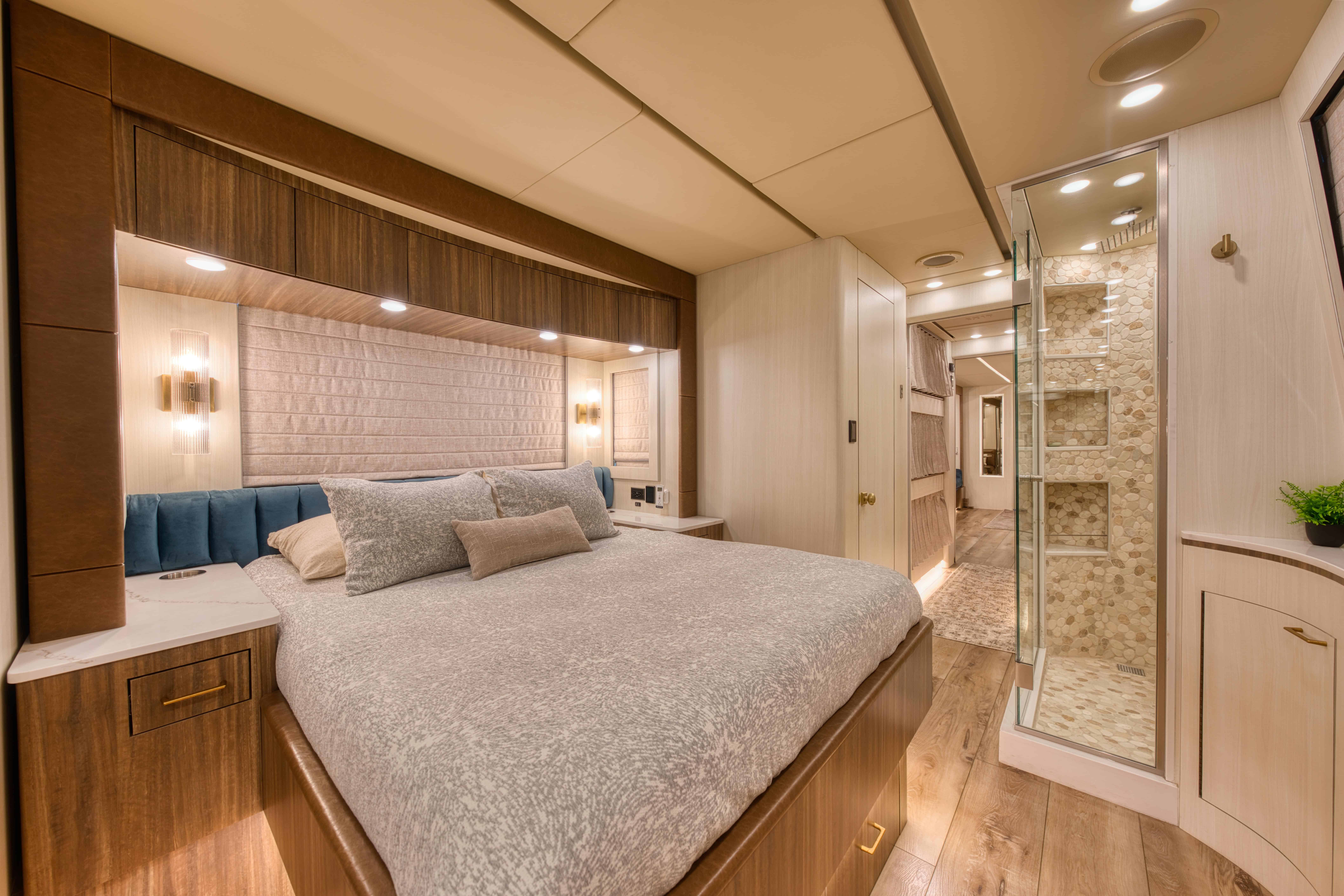
Comfortable sleeping quarters. On a long run, quality sleep is the difference between a crew that performs and a crew that deteriorates. For artists specifically, the bus with a bedroom on a star coach offers a private, comfortable space that makes consistent rest possible regardless of what time the bus is moving.
Slide-outs. When the bus is your home, the extra two to three feet of space a slide-out provides while parked changes the feel of the environment entirely. A comfortable crew is a functional crew.
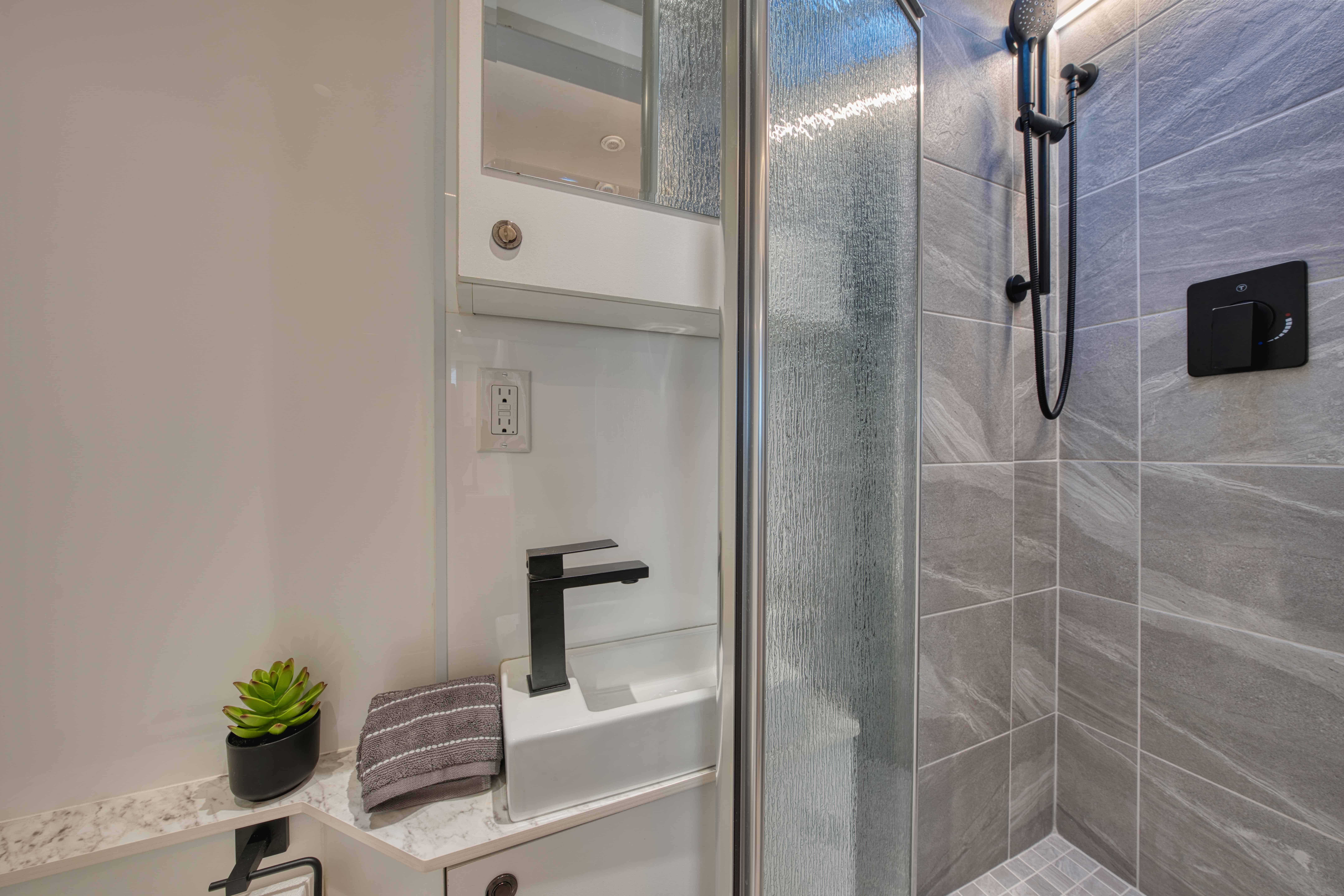
Showers. Keeping artists and crew feeling clean and refreshed is not a luxury on a long tour. It is a baseline requirement for maintaining morale and professionalism. TCS coaches with showers are available across star and crew configurations.
WiFi. Jennifer specifically calls out great functioning WiFi as something clients consistently notice. TCS Prevost entertainer coaches run Peplink and Starlink systems, which means reliable connectivity even in areas where standard carrier coverage fails.
Our Coaches

What a Slide-Out Conversion Actually Does to Your Living Space
A slide-out conversion is a box-like section fitted to the exterior of the coach. While the bus is in transit the slide is retracted flush against the side of the vehicle. Once the bus is parked, the slide-out extends outward two to three feet, adding meaningful usable space to whatever room it is attached to.
TCS offers both slide and non-slide configurations across star and crew coaches, so you can choose the setup that best fits your tour’s needs and budget. On a long run where the entertainer coach becomes home between shows, the difference a slide makes is the difference between a functional living space and a tight one.
Star Coach vs Crew Coach: The Practical Daily Difference
On paper the distinction is straightforward. In practice it shapes what life on the road actually feels like.
Star Coach
A star coach is a bus with bedroom accommodations built for comfort first. It typically features a private rear bedroom alongside a smaller number of bunks, and is optimized for the artist or a small VIP group who needs genuine rest and privacy between shows. TCS offers star coaches with and without slides and showers across multiple configurations.
Crew Coach
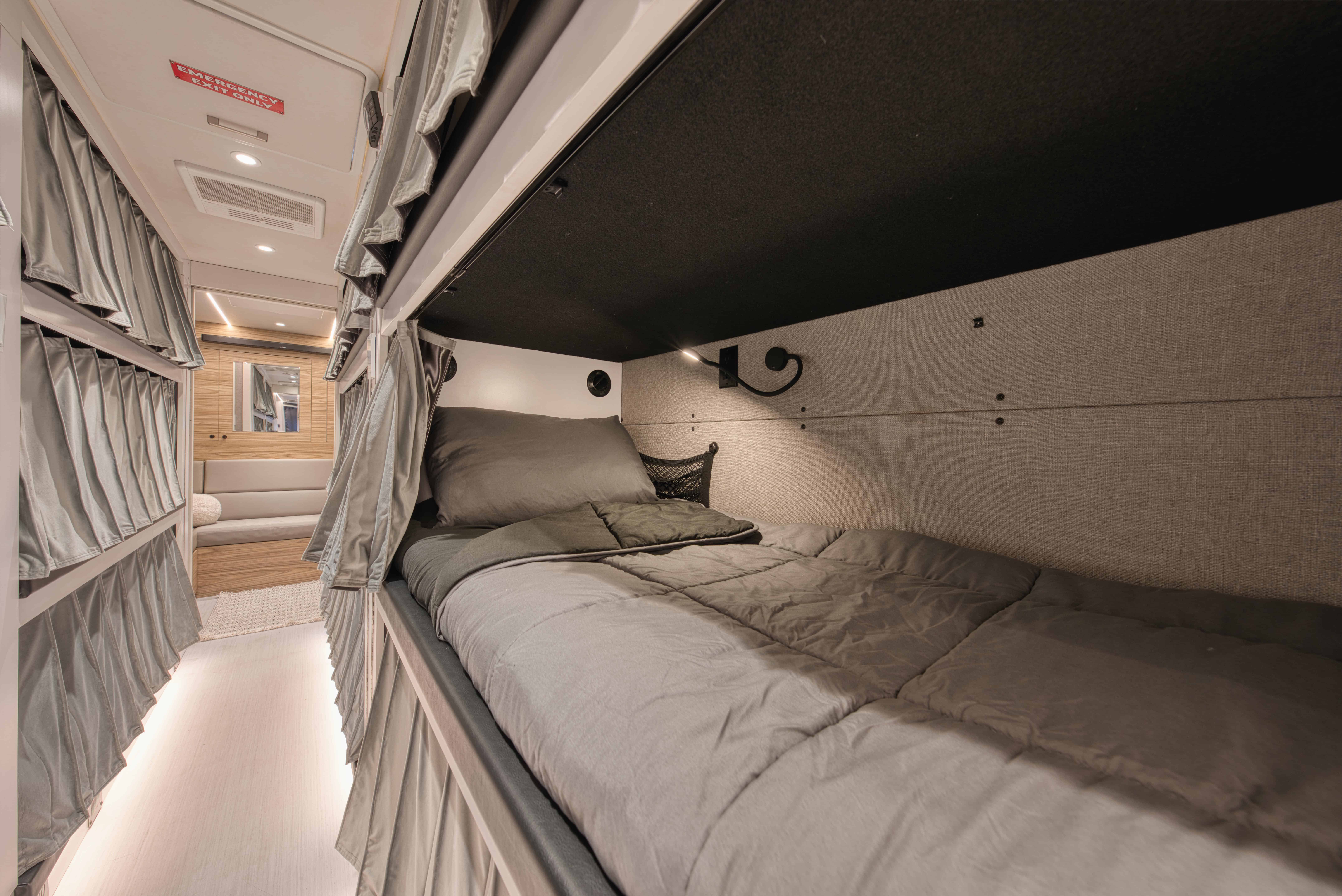
A crew coach prioritizes capacity. While still comfortable, it is built to fit as many bunks as possible, making it the right call for full touring crews where headcount matters more than private space. TCS offers crew coaches with and without slides across multiple configurations.
The Practical Decision
If you are routing an artist with a handful of key personnel and quality sleep is the priority, the star coach is the right choice. If you are moving a full crew and need everyone in one vehicle, the crew coach is built for exactly that. TCS has multiple configurations of both, and Jennifer can match the right Prevost entertainer coach to your specific routing, headcount, and show schedule.
How Pricing Is Structured
TCS pricing accounts for every variable that affects what it actually costs to run your luxury touring bus safely and professionally. The key inputs are:
Season and demand. Rates reflect market conditions. Winter tours typically carry lower rates. Peak touring season commands higher rates.
Number of coaches. Leasing multiple coaches for the same tour opens the door to quantity discounts.
Tour mileage. Total miles driven across the full run are calculated from your actual itinerary, not estimated.
Operational costs. Fuel, DOT fees, WiFi, weekly cleanings, and generator servicing are all factored in, not added as surprises after you sign.
Cargo trailers. Many clients playing smaller venues or working within tighter budgets lease a 15-foot cargo trailer alongside their touring bus rental.
TCS’s trailers are all brand new, black, with a ramp door, side merch door, e-track interior, and a set of load bars and straps included with each rental.
To get a same-day quote built around your specific routing, headcount, and dates, call us or fill out our quote form.


What Jennifer George Has Learned About Artist Preferences
Jennifer George has been running TCS’s Entertainer Division long enough to know that the difference between a good tour and a difficult one often comes down to details that have nothing to do with the music.
One of the things she takes pride in is matching the right driver to the right client. She gets to know each client’s preferences and needs, and she builds driver teams that complement each other and the artist or crew they are traveling with. The right driver for a headline artist is not necessarily the right driver for a crew bus, and Jennifer knows which of her drivers are better suited to which environment.
She also keeps track of the small things that clients consistently respond to: reliable WiFi, a coach that functions as well as it looks, and a team that handles problems before the client knows they exist.
The luxury experience, in Jennifer’s view, is not about aesthetics alone. It is about delivering a touring environment where the artist and crew can focus entirely on the show, because everything else has already been handled.
Why Back to Back Shows Require More Lead Time Than You Think
Most routing mistakes happen because tour managers treat distance as a map problem. It is not. It is a logistics problem with three layers stacked on top of each other.
The hours of service constraint
A driver can only legally drive a certain number of hours before a mandatory rest period kicks in. That means the distance between two cities is not just a map calculation. It is a map calculation filtered through what a driver can legally cover in a single leg. Two cities that look close on paper may require an overnight stop or a driver change that adds significant time to the logistics. Jennifer George, Director of TCS’s Entertainer Division, runs every itinerary through commercial mileage software specifically to check city-to-city mileage against legal driving limits. If any leg exceeds the legal 10-hour driving limit, the routing needs to account for a team driver or a hotel stop to reset the clock before the situation becomes an emergency.
Load-in and load-out windows
Venues have specific times when a coach can arrive, where it can park, and when it needs to move. A tour manager who does not account for those windows when routing can arrive legally and still miss the window that works for the artist’s schedule.
Back to back specifically
The pressure compounds when there is no recovery day between shows. Every hour of buffer disappears. If anything runs long at the first show, the routing for the second show absorbs that delay with no room to spare. The best tour managers build time in before they need it, not after.
What Are Deadhead Miles and How Do You Minimize Them
Deadhead miles are the miles a coach travels to reach your tour’s starting point and return after the final date. They are not free miles and they are factored into your quote.
The most practical way to minimize deadhead is to start and end your tour near where the coaches are stationed. TCS keeps most of its fleet in Nashville, Tennessee, which makes it the natural anchor for country and Americana routing, and maintains coaches in Orange County, California for West Coast tours. Starting a West Coast run from a Southern California city rather than driving coaches from Nashville can meaningfully reduce your deadhead costs.
Depending on the time of year and the specifics of your tour, TCS works with clients to find a deadhead arrangement that makes sense for everyone. It is always worth having the conversation.
Ready to Price Your Tour-Ready Coach?
Tell us your dates, routing, and headcount. We’ll recommend the right conversion and send a fast, clear quote.
Request A Quote